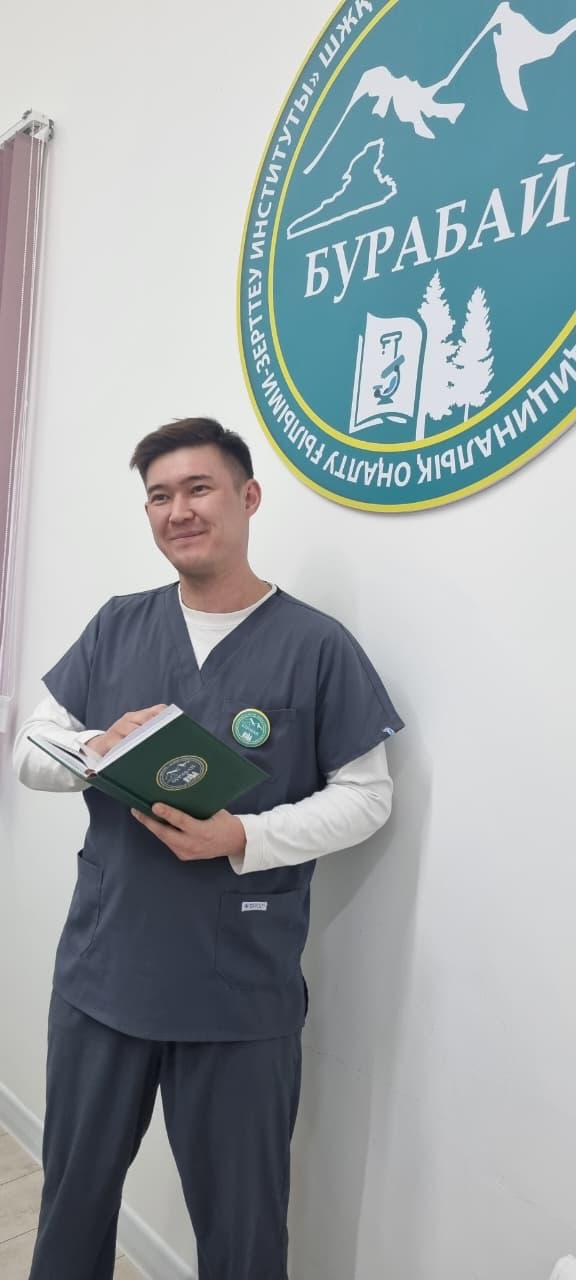
An employee of the Research Institute of Balneology and Medical Rehabilitation helped the victims of the cafe fire
Published by : Марлан
The explosion and subsequent fire at the Pilaf Center cafe in Shchuchinsk shocked the Akmola region and the whole of Kazakhstan. In an instant, an ordinary evening turned into a tragedy, with fire, screams and confusion.
The senior medical brother of the branch of the Research Institute of Balneology and Medical Rehabilitation of the Ministry of Health of the Republic of Kazakhstan, Abylaikhan Kairov, was an unwitting eyewitness to these terrible events. But at the crucial moment, he became not just a witness, he became the one who took responsibility.
That evening, the staff had just been taken away from work.
"I decided to have a snack, called my friends. We gathered in the dining room on the second floor of the Akzhelken trading house. At one point, the barmaid shouted that the Pilaf Center was on fire. At first I didn't believe it. I looked out the window and really saw the flames. Guys in their twenties with burnt hair started running up to the first floor, screaming. I put on my jacket and ran to the epicenter of the events," Abylaikhan recalls.
When he arrived, the fire crews were already unwrapping their sleeves and fighting the fire. But before the ambulances arrived, help was needed immediately. And Abylaikhan acted the way he used to act in his profession - quickly, clearly, without panic.
The first thing he did was call the hospital's inpatient department, the heads of intensive care and traumatology departments, and warn them about a possible mass admission of victims. This decision, made in a matter of minutes, allowed doctors to prepare for the influx of serious patients.
And then he began to help those who were being carried out of the burning building. The main impact fell on the cafe staff, especially those who were in the kitchen. People were in a state of shock, with burns, and had difficulty breathing.
"I took two women to the intensive care unit. I was at the place until about one o'clock in the morning. The hardest part is seeing how many people just stand and stare. Someone even filmed me doing cardiopulmonary resuscitation. I raised my head and shouted for the car to come quickly. A police pill arrived. We quickly loaded the victim, then another woman, she had a painful shock, I tried to calm her down, support her," he says.
That night, Abylaikhan Kairov did not think about himself. He did not wait for instructions, did not look for excuses, and did not pass by. His professional duty became a personal responsibility. Where others got lost, he acted. Where someone was filming on a phone, he was giving people back their breath and hope.
Heroism is not a big word. It is the ability to remain human and professional at a critical moment. This is exactly how Abylaikhan Kairov, an employee of the Research Institute of Balneology and Medical Rehabilitation of the Ministry of Health of the Republic of Kazakhstan, proved himself, a man who did everything possible to save lives on a tragic night.
The senior medical brother of the branch of the Research Institute of Balneology and Medical Rehabilitation of the Ministry of Health of the Republic of Kazakhstan, Abylaikhan Kairov, was an unwitting eyewitness to these terrible events. But at the crucial moment, he became not just a witness, he became the one who took responsibility.
That evening, the staff had just been taken away from work.
"I decided to have a snack, called my friends. We gathered in the dining room on the second floor of the Akzhelken trading house. At one point, the barmaid shouted that the Pilaf Center was on fire. At first I didn't believe it. I looked out the window and really saw the flames. Guys in their twenties with burnt hair started running up to the first floor, screaming. I put on my jacket and ran to the epicenter of the events," Abylaikhan recalls.
When he arrived, the fire crews were already unwrapping their sleeves and fighting the fire. But before the ambulances arrived, help was needed immediately. And Abylaikhan acted the way he used to act in his profession - quickly, clearly, without panic.
The first thing he did was call the hospital's inpatient department, the heads of intensive care and traumatology departments, and warn them about a possible mass admission of victims. This decision, made in a matter of minutes, allowed doctors to prepare for the influx of serious patients.
And then he began to help those who were being carried out of the burning building. The main impact fell on the cafe staff, especially those who were in the kitchen. People were in a state of shock, with burns, and had difficulty breathing.
"I took two women to the intensive care unit. I was at the place until about one o'clock in the morning. The hardest part is seeing how many people just stand and stare. Someone even filmed me doing cardiopulmonary resuscitation. I raised my head and shouted for the car to come quickly. A police pill arrived. We quickly loaded the victim, then another woman, she had a painful shock, I tried to calm her down, support her," he says.
That night, Abylaikhan Kairov did not think about himself. He did not wait for instructions, did not look for excuses, and did not pass by. His professional duty became a personal responsibility. Where others got lost, he acted. Where someone was filming on a phone, he was giving people back their breath and hope.
Heroism is not a big word. It is the ability to remain human and professional at a critical moment. This is exactly how Abylaikhan Kairov, an employee of the Research Institute of Balneology and Medical Rehabilitation of the Ministry of Health of the Republic of Kazakhstan, proved himself, a man who did everything possible to save lives on a tragic night.